
Hamilton Cell Density Sensors (InCyte / Dencytee)
Hamilton cell density sensors for bioprocesses: InCyte measures viable cell density (VCD) by permittivity, Dencytee measures total cell density (TCD) and turbidity (NTU) optically; reusable and single-use versions.
Send us your requirementHamilton Cell Density Sensors (InCyte / Dencytee) — describe your application and we will help you identify the right model and configuration together.
Technical specifications
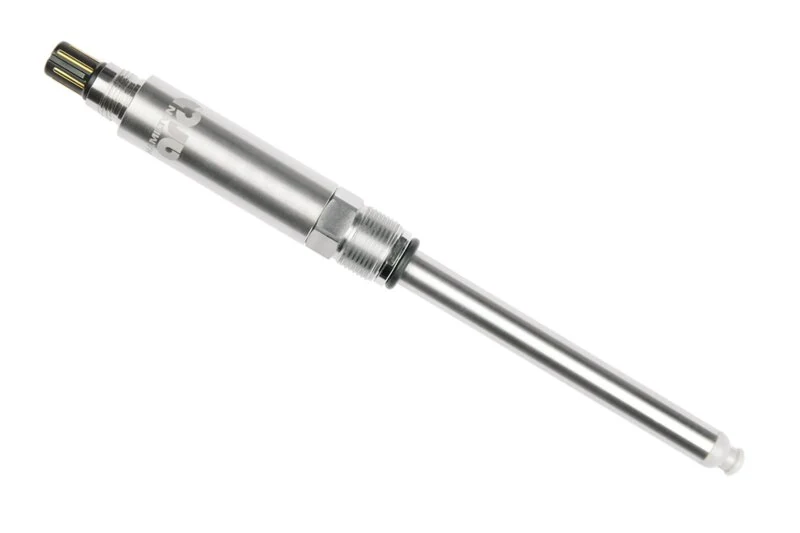
| Measuring technologies | InCyte: permittivity-based viable cell density (VCD); Dencytee: optical transmission and reflection based total cell density (TCD) |
|---|---|
| Output | Arc digital (RS485) for both families |
| InCyte Arc Expert | Reusable sensor; 120, 220, 320 and 420 mm shaft lengths; measuring range 5 x 10^5 to 8 x 10^9 cells/mL (mammalian); process temperature 0 to 60 °C; 0 to 12 bar; autoclavable, CIP and SIP |
| Dencytee Arc RS485 | 120, 225, 325 and 425 mm shaft lengths; wavelength 860 nm; 0 to 4 AU and 0 to 30,000 NTU; configurable NTU output; certified in water and at a 10,000 NTU standard |
| Dencytee operating limits | 0 to 140 °C, with no TCD reading above 80 °C; 0 to 12 bar; autoclavable and steam sterilizable (140 °C, 30 minutes); CIP with 3% NaOH at 90 °C for 30 minutes |
| Dencytee construction | 12 mm diameter, PG 13.5, VP8 connector; wetted parts of stainless steel 1.4435, sapphire glass and EPDM; surface quality Ra < 0.4 µm (N5) |
| Single-use InCyte | Incyte-P SU sensor patch with a reusable Arc Module (Arc Module Incyte-P SU or Incyte-W SU); 4 to 50 °C, 0 to 1 bar g, gamma irradiation up to 50 kGy for the disposables |
| Service accessories | Solution B for Incyte Arc e-conditioning (REF 243742); Dencytee Maintenance Tool Kit for easy sensor verification (REF 10146924) |
Hamilton InCyte and Dencytee are Arc digital (RS485) sensors that monitor biomass in bioreactors and fermenters in situ, in real time and without sampling. InCyte measures permittivity, which correlates to viable cell density (VCD); Dencytee measures transmitted and reflected 860 nm light and reports total cell density (TCD) and turbidity. As one of Hamilton’s distributors in Turkey, Mikron Proses (Üsküdar, Istanbul) supplies both sensor families and provides application consulting on sensor selection and ArcAir integration.
Need cell density monitoring for a bioreactor? → Send us your requirement
For the permittivity sensor alone, see the Hamilton Incyte Arc viable cell density sensor page.
InCyte and Dencytee compared
| Feature | Hamilton InCyte Arc (VCD) | Hamilton Dencytee Arc RS485 (TCD / NTU) |
|---|---|---|
| Quantity measured | Viable cell density (VCD): only viable cells | Total cell density (TCD) and turbidity (NTU) |
| Principle | Permittivity | Optical near-infrared transmission and reflection at 860 nm |
| Measuring range | 5 x 10^5 to 8 x 10^9 cells/mL (mammalian); conductivity 0.5 to 80 mS/cm | 0 to 4 AU; 0 to 30,000 NTU |
| Dead cells and debris | Insensitive to cell debris and microcarriers | Detects all particles that scatter light at 860 nm: living and dead cells and cell debris |
| Reusable shaft lengths | 120, 220, 320, 420 mm | 120, 225, 325, 425 mm |
| Single-use version | Yes: Incyte-P SU patch with a reusable Arc Module | No: stainless steel Arc RS485 version only |
| Temperature / pressure | 0 to 60 °C / 0 to 12 bar | 0 to 140 °C (no TCD reading above 80 °C) / 0 to 12 bar |
| Verification and care | Solution B for e-conditioning (REF 243742) | Maintenance Tool Kit (REF 10146924) |
InCyte: viable cell density by permittivity
Viable cells behave like small capacitors: their polarization and depolarization in an alternating electrical field is measured and correlated to viable cell density. Because only viable cells polarize, the method is insensitive to cell debris and microcarriers. The reusable InCyte Arc Expert is offered in 120, 220, 320 and 420 mm shaft lengths.
Dencytee: total cell density and turbidity
Dencytee measures total cell density without distinguishing live from dead cells, and is also effective after inoculation, when cells expand quickly but concentrations are low and capacitance-based readings are less reliable. Hamilton describes the combination of Incyte Arc and Dencytee Arc as a way to deliver viability information on a bioprocess. The datasheet gives a range of 0 to 4 AU and 0 to 30,000 NTU, a configurable NTU output and certification in water and at a 10,000 NTU standard.
Single-use InCyte line
For single-use bioreactor bags, the Incyte-P SU sensor patch is integrated into the bag and read by a reusable Arc Module (Arc Module Incyte-P SU or Incyte-W SU). The patch is discarded with the bag at the end of each process while the module is reused. The disposables tolerate gamma irradiation up to 50 kGy.
InCyte or Dencytee?
The right sensor depends on what you need to measure (viable cells only, or the total cell population), on whether you want a reusable or single-use line and on your existing Arc infrastructure. Related bioreactor sensors are the GlucoSense glucose sensor, the CO2NTROL dissolved CO2 sensor and the Hamilton dissolved oxygen sensors; configuration is covered on the Arc peripherals and ArcAir page.
Applications
- Viable cell density (VCD) monitoring in biopharma cell culture and fermentation processes (InCyte)
- Total cell density and optical density based process monitoring (Dencytee)
- Turbidity (NTU) monitoring in crystallization, filtration and dissolution processes (Dencytee Arc RS485)
- Cell density measurement in single-use bioreactors and bag systems (InCyte-P SU)
Datasheets and manuals
- InCyte Sensor Unit Quick Guide User manual · PDF
- Dencytee Arc RS485 120 Datasheet Datasheet · PDF
- Hamilton Process Analytics Catalog 2024 Catalog · PDF
Documents were last compared with the manufacturer's source on 2026-10-30.
Other Hamilton products
- Hamilton Arc Peripherals and ArcAir Software (Arc View Mobile, Arc Wi Pivot, Arc USB, ArcAir) Online Measurement and Automation Systems
- Hamilton ChemoTrode pH Sensors for Aggressive Media pH and ORP Sensors
- Hamilton CO2NTROL Solid-State Optical Dissolved CO2 Sensor Online Measurement and Automation Systems
- Hamilton DuraCal pH Buffer, ORP and Conductivity Calibration Solutions Online Measurement and Automation Systems
- Hamilton EasyControl pH and ORP Sensors pH and ORP Sensors
- Hamilton Bioprocess pH Sensors (EasyFerm Plus, EasyFerm Bio and OneFerm) pH and ORP Sensors
- Hamilton GlucoSense In-Situ Optical Glucose Sensor for Bioreactors Online Measurement and Automation Systems
- Hamilton Conductivity Sensors Conductivity Sensors
- Hamilton InchTrode pH Electrode pH and ORP Sensors
- Hamilton Incyte Arc Viable Cell Density Sensor Online Measurement and Automation Systems
- Hamilton IonoTrode pH Electrode for Low-Conductivity Media pH and ORP Sensors
- Hamilton Calibration Solutions (DuraCal pH and ORP Buffers and Conductivity Standards) Online Measurement and Automation Systems
- Hamilton Laboratory pH and ORP Electrodes (GLP Series) Online Measurement and Automation Systems
- Hamilton Process Analytics, Liquid Handling and Laboratory Solutions Online Measurement and Automation Systems
- Hamilton Microlab 600 and 700 Diluters, Dispensers and Syringe Pumps Online Measurement and Automation Systems
- Hamilton MecoTrode pH Electrode Hamilton pH and ORP Process Sensors
- Hamilton OEM Sensors and Sensor Accessories Online Measurement and Automation Systems
- Hamilton Oxygen Sensor Accessories (Oxylyte Electrolyte, Membrane Kits, Calibration Station) Hamilton Dissolved Oxygen Sensors
- Hamilton OneFerm pH Single-Use pH Sensor Hamilton pH and ORP Process Sensors
- Hamilton Polilyte Plus pH Sensors Hamilton pH and ORP Process Sensors
- Hamilton Process Fittings and Flow Cells (FlexiFit, StatoFlex, FlowChamber, FlowCell, FlexiFlow, MasterFit) Online Measurement and Automation Systems
- Hamilton Retractex Retractable Sensor Housings Online Measurement and Automation Systems
- Hamilton Precision Syringes, Needles and Chromatography Accessories Online Measurement and Automation Systems
- Hamilton VisiFerm DO, OxyFerm, OxyGold and Oxysens Dissolved Oxygen Sensors Hamilton Dissolved Oxygen Sensors
Send us your requirement for Hamilton Cell Density Sensors (InCyte / Dencytee)
Describe your application; we will help you identify the right model and configuration.